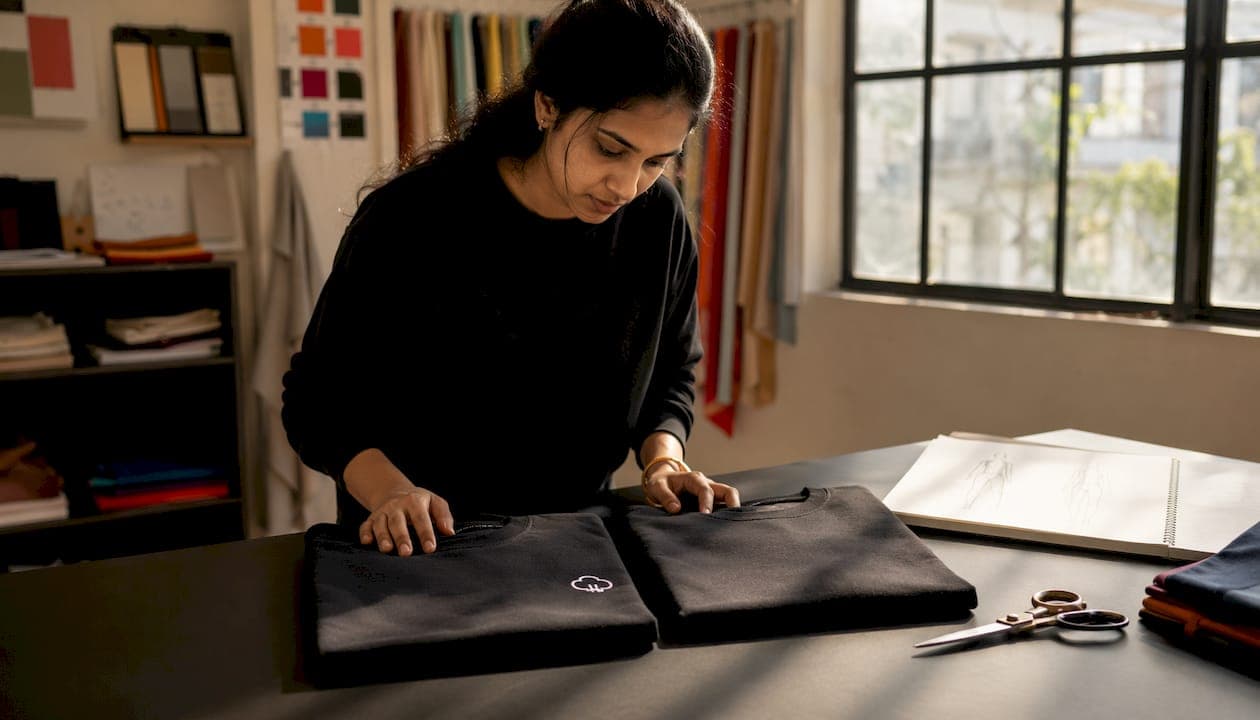
For a political statement T-shirt you'll wear to rallies, post on social media, and reach for every week, choose Pima or Supima cotton. The longer fibers hold bold prints sharper, resist pilling through repeated washes, and feel noticeably softer against skin. Standard Upland cotton makes sense for bulk event giveaways or short-run campaigns where price per unit matters more than longevity.
Three quick deciding factors:
- Softness and drape: Pima/Supima fibers run 36.5–38 mm in length versus 25–28 mm for Upland, producing a smoother hand that makes even a small chest graphic read more cleanly.
- Print and color retention: The smooth ELS fiber surface accepts dye more evenly, so screen prints and direct-to-garment inks stay vivid longer.
- Traceability: Supima is a licensed trademark with chain-of-custody audits; generic "Pima" labeling carries real mislabeling risk. Liberallabel's tees use verified soft cotton so you know what you're actually wearing.
Table of Contents
- How does Pima/Supima cotton compare to regular cotton for T-shirts?
- What actually makes Pima cotton different from regular cotton?
- How do fiber differences show up on a printed statement tee?
- How do you avoid buying a mislabeled "Pima" shirt?
- Care instructions that protect both the fabric and the print
- When is it worth paying more for Pima or Supima?
- Why Liberallabel's tees work for activists who care about feel and message
- Key Takeaways
- The fabric choice is the political choice
- Liberallabel statement tees: wear what you actually believe
- Sources and further reading
How does Pima/Supima cotton compare to regular cotton for T-shirts?
| Dimension | Pima / Supima | Upland (Regular) Cotton |
|---|---|---|
| Softness / hand | Silky, smooth; fewer fiber ends at surface | Comfortable but coarser; more initial scratchiness |
| Durability | Stronger yarn bonds; resists tearing and fraying | Good for daily use; wears faster over many washes |
| Color retention & print | Smooth surface holds dye evenly; prints stay vivid | Shorter fibers fade faster; bold graphics dull sooner |
| Upfront price | Higher | Lower |
| Cost-per-wear | Better long-term value; less frequent replacement | Higher replacement rate offsets lower sticker price |
| Label confidence | Supima = audited trademark; generic Pima = variable | Widely standardized; less mislabeling risk |
| Ideal use | Everyday activist wear, photography, fundraising tees | Bulk event shirts, short-run campaigns, giveaways |
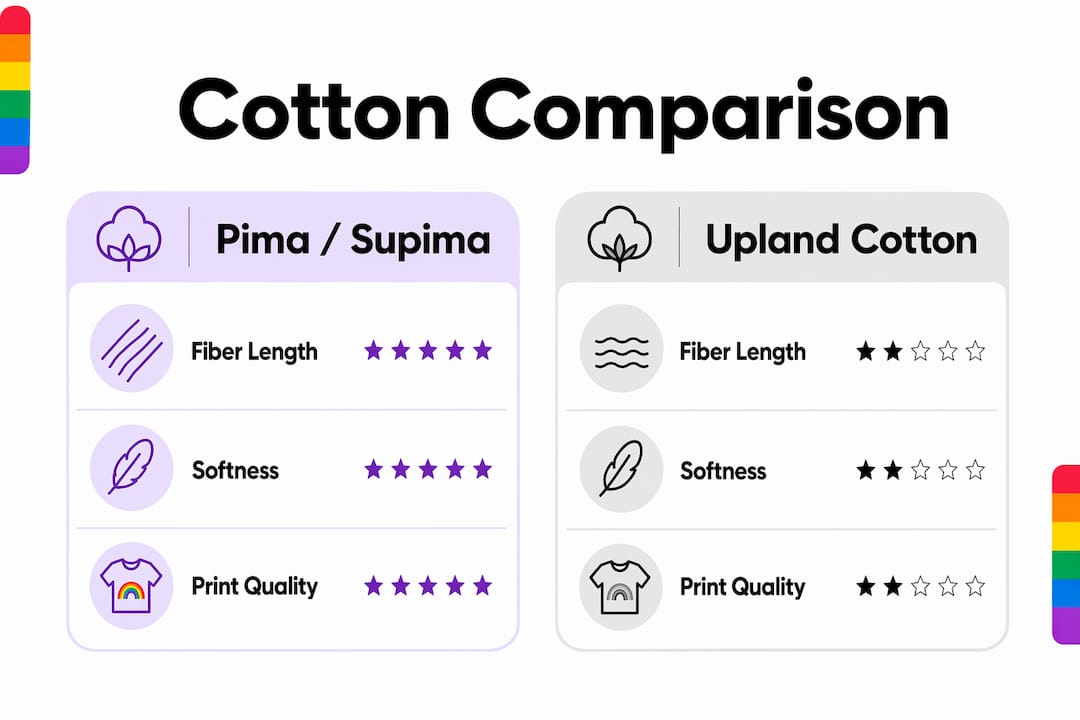
For a statement tee meant to start conversations, the print appearance and cost-per-wear columns are the ones that matter most.
What actually makes Pima cotton different from regular cotton?
Pima cotton is Gossypium barbadense, an extra-long staple (ELS) species. Upland cotton is Gossypium hirsutum, which accounts for roughly 90% of global production and is the default fiber in most "100% cotton" garments you'll find at a mass retailer.
The difference that matters is fiber length. HVI testing (High Volume Instrument, the USDA/ASTM industry standard) measures Upper Half Mean Length (UHM), bundle strength, and uniformity index. In plain terms:
- UHM 36.5–38 mm (Pima/Supima) vs. 25–28 mm (Upland): Longer fibers mean fewer loose ends sticking out of the yarn. That's why Pima feels silkier and why it pills far less after repeated washing.
- Bundle strength 36–42 g/tex (Pima) vs. 28–32 g/tex (Upland): Stronger yarn holds its shape through laundering and friction, which matters when a graphic tee gets washed weekly.
- Uniformity index: Higher uniformity in ELS cotton means consistent dye uptake across the whole garment, not patchy fading.
Where Supima fits in: Supima is not a different fiber. It's a trademarked certification controlled by the American Supima Association (ASA), covering only U.S.-grown Pima cotton with licensed supply-chain audits and Oritain isotope verification on finished yarn and garments. The difference between Supima and generic Pima is certification, not botany.
Pro Tip: Ask any brand selling "Pima" tees for their HVI test report or Supima licensee ID. A brand that can't produce either is almost certainly using the term as a marketing label, not a fiber guarantee.
How do fiber differences show up on a printed statement tee?
This is where the technical gap becomes visible to anyone wearing the shirt.
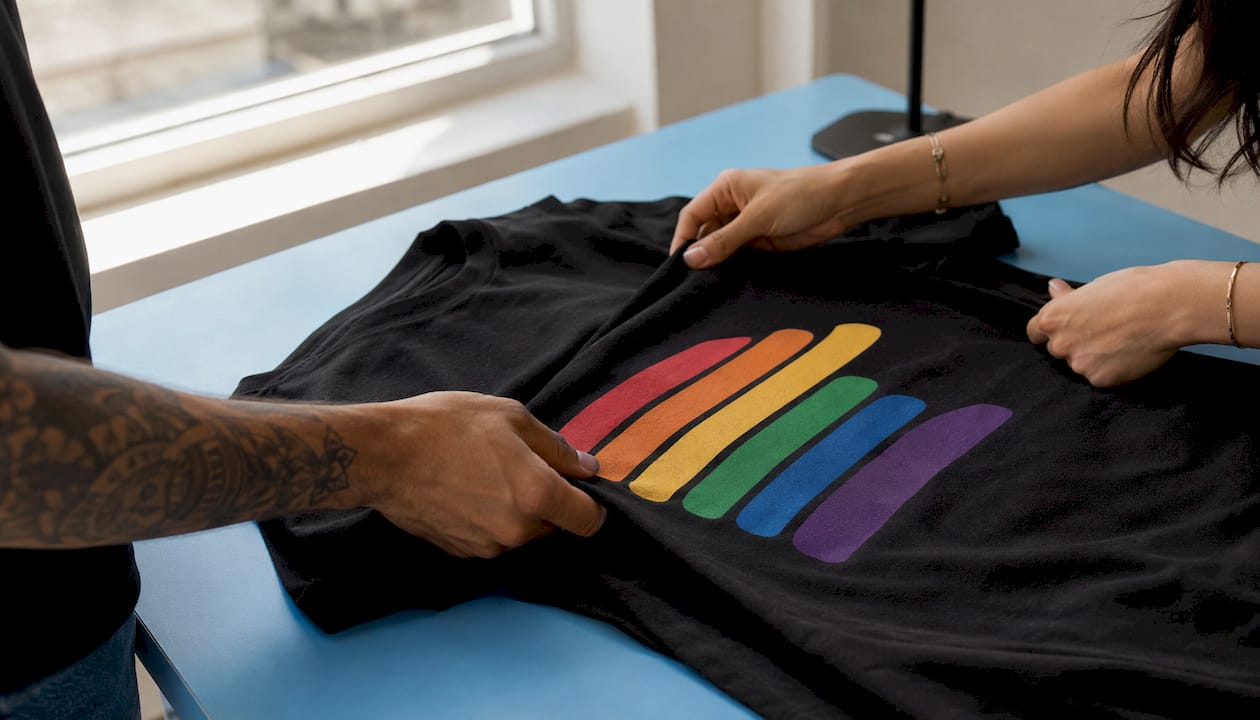
A Pima tee's smooth surface gives screen-print and direct-to-garment (DTG) inks a flatter, more even base to sit on. Bold text and high-contrast graphics stay crisp because the ink isn't fighting a textured, pilling surface. On Upland cotton, shorter fibers begin to fray at the surface after 10–15 washes, which softens edges on fine-detail prints and dulls solid color fields.
Drape matters too. A well-constructed Pima jersey falls closer to the body, so a chest graphic sits flat in photos rather than bunching across seams. Peruvian Pima producers often use fine yarn counts and interlock knit constructions specifically to get this effect, and it shows in how a design photographs at a rally or fundraiser.
| Metric | Pima / Supima | Upland Cotton |
|---|---|---|
| UHM fiber length | 36.5–38 mm | 25–28 mm |
| Bundle strength | 36–42 g/tex | 28–32 g/tex |
| Pill resistance | High (long anchored fibers) | Moderate (shorter fibers break free) |
| Dye / print vibrancy after 20+ washes | Retained | Noticeably reduced |
~90% of global cotton is Upland. That's why most "100% cotton" shirts at a low price point are Upland by default, regardless of what the tag implies.
How do you avoid buying a mislabeled "Pima" shirt?
"Pima" is not a protected trademark. Any brand can print it on a label without consequence, and FTC investigations have found that many products marketed as Pima or Egyptian cotton fail ELS fiber specifications when tested. The mislabeling problem is widespread in mass-market apparel.
Practical verification steps:
- Look for the Supima hangtag or logo. It indicates ASA-licensed supply-chain compliance from farm through finished garment.
- Request HVI test data. A legitimate ELS supplier can provide UHM, strength, and uniformity numbers. No data means no guarantee.
- Check brand transparency. Does the brand name the mill, the farm region, or the certification body? Vague "premium Pima" copy with no sourcing detail is a red flag.
- Watch the price. Genuine ELS cotton costs more to grow and spin. A "Pima" tee priced at Upland rates almost certainly isn't what it claims.
Labels like "Supima-style" or "Pima-feel" carry zero certification weight.
Pro Tip: If a brand uses the word "Supima" without the ASA license, that's a trademark violation. The Supima Association maintains a public licensee list you can check before buying.
Care instructions that protect both the fabric and the print
The single most important rule: wash cold, dry low or line-dry. Heat is the primary enemy of both ELS fiber integrity and printed graphics.
- Turn the shirt inside out before every wash to protect the print surface from friction.
- Use a mild, dye-free detergent. Optical brighteners in standard detergents degrade both fiber and ink over time.
- Skip the dryer when possible. If you must machine-dry, use the lowest heat setting.
- For DTG prints specifically, avoid wringing or twisting the shirt while wet.
- Repair small snags or holes early. A loose thread on an ELS tee won't run the way a knit sweater does, but catching it early keeps the fabric structurally sound.
Screen-print and heat-transfer graphics are more heat-sensitive than the cotton itself, so the care rules above apply regardless of fiber type.
When is it worth paying more for Pima or Supima?
A quick checklist before you decide:
- Will you wear this shirt more than 20 times? If yes, the cost-per-wear math favors ELS cotton. Industry practitioners consistently note that higher upfront cost yields lower replacement frequency and better color retention over time.
- Will the design be photographed? Pima's drape and smooth surface photograph better, which matters for social media visibility of your message.
- Does tactile softness support your brand? A shirt that feels premium signals care and intentionality, which reinforces the message on it.
- Do you need ethical traceability? If your activism includes supply-chain accountability, Supima's audited sourcing is a concrete claim you can make.
Choose Upland cotton when you're ordering in bulk for a single event, running a short-term campaign, or working within a tight per-unit budget. Upland is reliable, widely available, and perfectly adequate for shirts that won't see heavy repeat wear.
On blends: Pima blended with modal or viscose adds drape and reduces cost slightly, but can complicate DTG printing. Pima/polyester blends improve moisture-wicking for outdoor events but reduce the natural feel. Pure ELS cotton remains the cleanest choice for print quality.
Why Liberallabel's tees work for activists who care about feel and message
Liberallabel builds its statement tees around soft, unisex cotton with a fit guide and size inclusivity, so the shirt works for the widest possible range of wearers. The brand's focus is on prints that start conversations, which means fabric quality isn't an afterthought. A tee that pills after five washes or fades after ten undermines the message it's carrying.
Key features worth knowing:
- Soft cotton construction designed for comfort during extended wear at events or rallies
- Bold, high-contrast graphics printed to hold up through repeated washing
- Unisex sizing with a fit guide to reduce returns and sizing guesswork
- Domestic and international shipping available
- Mission-driven design: every shirt addresses a social issue or promotes a value
When you want a shirt that looks as sharp in month six as it did on day one, and that you can point to as ethically sourced, Liberallabel's tees are built for exactly that use.
Key Takeaways
Pima and Supima cotton outperform standard Upland cotton for statement tees worn repeatedly, photographed often, and expected to hold bold prints through dozens of washes.
| Point | Details |
|---|---|
| Fiber length drives performance | Pima/Supima fibers run 36.5–38 mm vs. 25–28 mm for Upland, reducing pilling and improving dye retention. |
| Cost-per-wear favors ELS cotton | Higher upfront price yields fewer replacements and better color retention over time. |
| "Pima" label is unregulated | Supima is the only audited trademark; generic Pima claims carry real mislabeling risk. |
| Care cold to protect print and fiber | Wash cold, dry low or line-dry, and turn inside out to extend both fabric and graphic life. |
| Liberallabel | Soft cotton statement tees with bold, wash-resistant prints and inclusive sizing for activist wear. |
The fabric choice is the political choice
There's a version of this conversation that treats fabric as a purely technical question. It isn't, not when the shirt is carrying a message about equality or freedom.
A statement tee that fades in three months, pills at the collar, or distorts a graphic across a seam is doing quiet damage to the message it's supposed to amplify. Choosing verified ELS cotton, or at minimum demanding supply-chain transparency from whoever you buy from, is consistent with the values most political tees are trying to express. You can't credibly wear a shirt about accountability if you don't know where the shirt came from.
The Supima certification exists precisely because the cotton industry has a fraud problem. Knowing that, and choosing accordingly, is the same instinct that drives people to buy from brands whose politics match their own. Fabric traceability and political traceability aren't that different.
Liberallabel statement tees: wear what you actually believe
Political expression deserves a shirt that holds up. Liberallabel's statement tees are built on soft, unisex cotton with bold prints designed to stay vivid through the kind of regular wear that comes with actually living your values, not just owning the shirt.
Every design addresses a real social issue, from equality to freedom to kindness, and the fit guide takes the guesswork out of sizing across a full inclusive range. Domestic and international shipping means your message travels wherever you do.
Browse the full collection and find the shirt that says exactly what you mean at Liberallabel.
Sources and further reading
| Source | What it covers |
|---|---|
| Pima vs Supima Cotton: HVI Data and Verification | Technical HVI numbers (UHM, bundle strength), Supima certification, and Oritain isotope verification |
| Upland vs Pima Cotton: Differences, Uses, & Which to Choose | Global production share of Upland cotton and practical use-case comparison |
| Cotton Varieties Explained | Industry consensus on end-use determining fiber choice; balanced Upland vs. ELS framing |
| Pima Cotton vs Supima Cotton: Are They the Same? | Mislabeling risk, FTC investigation history, and consumer verification guidance |
| Peruvian Pima Cotton vs. Standard Cotton | Cost-per-wear analysis, yarn count and knit construction effects on drape and printability |
| Supima Cotton Fabric: Properties, Varieties, Uses | Supima Association history, sustainability practices, and strength comparison to regular cotton |