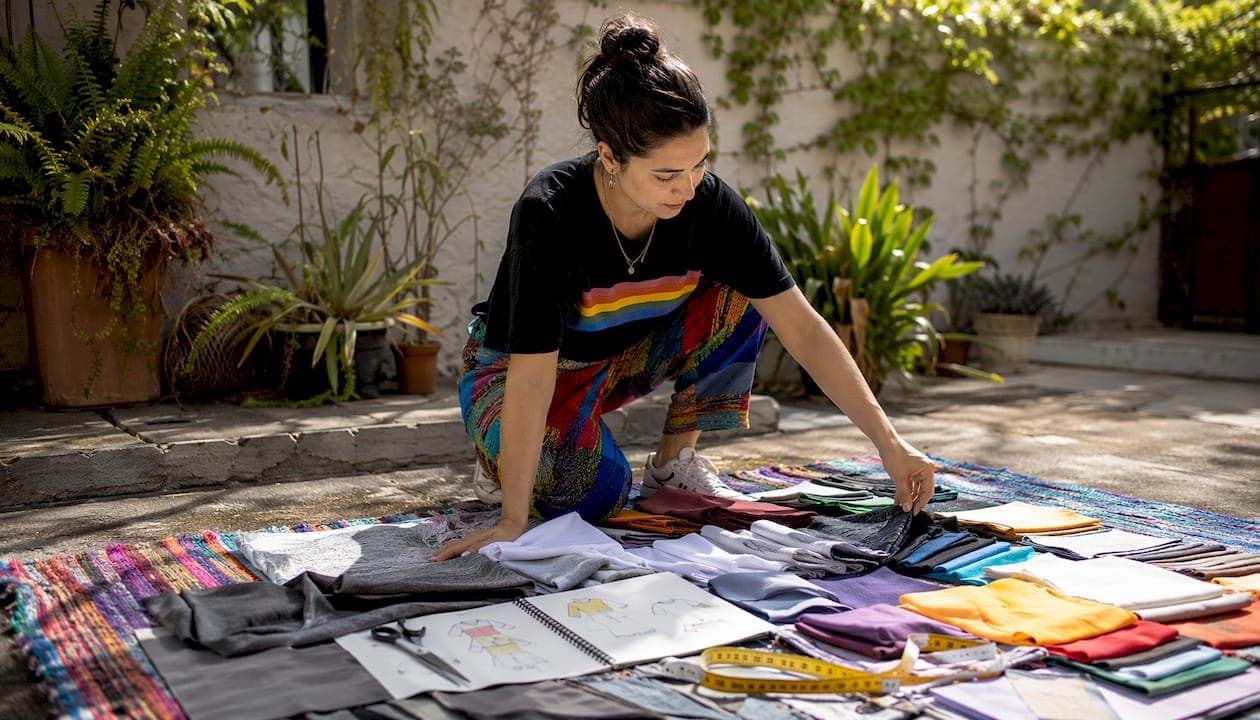
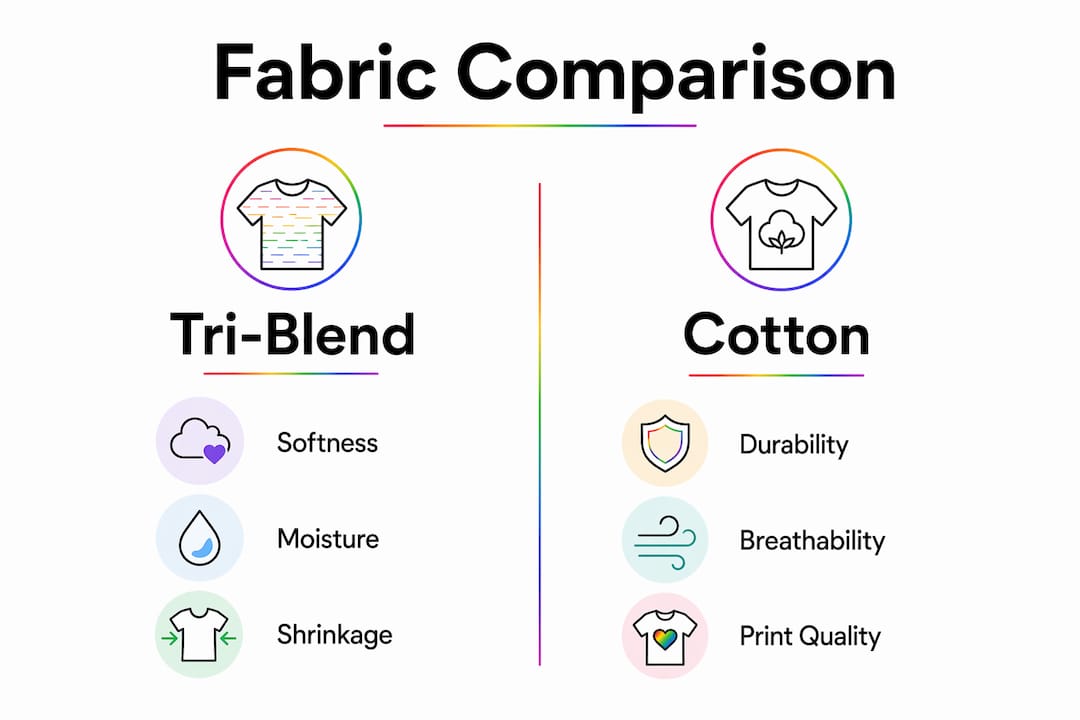
For immediate everyday comfort, choose tri-blend. For long-term durability and sharp, saturated prints, choose 100% cotton. That's the short answer, and most buyers can stop there.
The longer answer depends on what you're actually doing in the shirt. Here's how to think about it:
- Choose tri-blend if you want something that feels soft on first wear, drapes close to the body, and dries faster after a workout or a sweaty commute. The typical mix of polyester, cotton, and rayon produces a lighter, more forgiving fabric right out of the bag.
- Choose 100% cotton if you're buying for longevity, want crisp printed graphics, or prefer a classic structured tee that gets better with every wash.
GSM (grams per square meter) matters too. A 140–160 GSM cotton tee feels thin and breezy; 180–200 GSM feels substantial and holds its shape longer. Tri-blend tees tend to cluster in the lighter GSM range by design. Liberallabel's statement tees are built on soft, unisex cotton with a fit guide to help you find the right size, which is exactly the kind of detail that makes or breaks a purchase.
Table of Contents
- What tri-blend and 100% cotton actually are
- How each fabric feels on first wear and how it fits
- Which fabric breathes better and manages moisture
- How garments age: durability, pilling, and longevity
- Washing, drying, shrinkage, and simple care routines
- How each fabric behaves when you add a print
- Price differences and what to expect when shopping in the U.S.
- Environmental trade-offs between cotton and tri-blend
- Which fabric fits your situation: a quick decision guide
- Liberallabel's viewpoint on fabric and why it matters for statement tees
- Key Takeaways
- The case for knowing what you're actually buying
- Liberallabel statement tees: soft cotton built to wear your beliefs
- Useful sources and further reading
What tri-blend and 100% cotton actually are
100% cotton is a single-fiber fabric made entirely from natural plant cellulose. The quality varies a lot. Ring-spun cotton is tighter and smoother than open-end spun; combed cotton removes short fibers for an even softer hand. Pre-shrunk cotton has been treated to reduce (not eliminate) shrinkage before it reaches you. Weight ranges from around 130 GSM for a lightweight summer tee to 220 GSM for a heavier, more structured shirt.
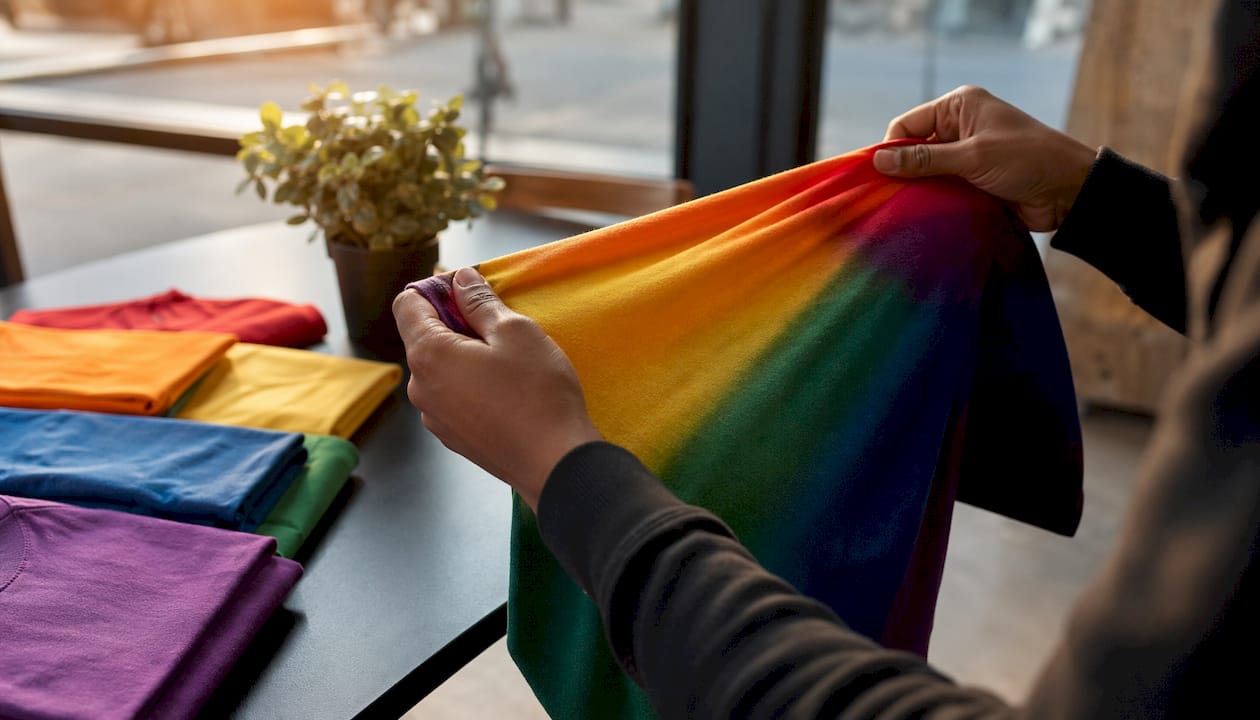
Tri-blend combines three fibers in a single knit. The most common starting ratio is 50% polyester, 25% cotton, and 25% rayon. Some manufacturers flip the cotton and polyester percentages; others add more rayon for extra drape. Each shift changes how the fabric feels and holds up.
| Composition | Typical Feel | Trade-off |
|---|---|---|
| 100% cotton (ring-spun) | Firm, breathable, structured | Can shrink; stiff at first |
| 50% poly / 25% cotton / 25% rayon | Soft, light, heathered drape | Less color saturation; heat-sensitive |
| 50% polyester, 25% cotton, 25% rayon | Closer to cotton hand, softer than pure cotton | Slightly less stretch than standard tri-blend |
Rayon is made from wood-pulp cellulose processed with chemicals. It contributes the silky hand and fluid drape that makes tri-blend feel distinctly different from a standard cotton tee, but it's also the most heat-sensitive fiber in the mix.
How each fabric feels on first wear and how it fits
Tri-blend wins the first-impression test. Pull one on and you notice the weight immediately: it's lighter, the fabric moves with you rather than sitting on you, and there's no break-in period. The rayon component is responsible for that silky, almost worn-in quality from day one.
Cotton starts firmer. A new 100% cotton tee can feel almost cardboard-stiff if it's a heavier GSM, though repeated washing softens it noticeably over time. Many people actually prefer the cotton feel once it's been through a dozen washes.
Tri-blend also offers roughly 15% more natural stretch than standard cotton, which translates to a more forgiving fit across different body types. That stretch is why tri-blend drapes closer to the body without feeling clingy.
Fit implications by fabric:
- Layering: Tri-blend's lighter weight and close drape make it easier to layer under a flannel or jacket without bulk.
- Oversized looks: Cotton holds its shape better for a deliberately boxy or oversized silhouette.
- Curvy or athletic builds: Tri-blend's stretch accommodates shape changes across the torso more gracefully.
- Traditional/structured preference: Cotton gives the classic boxy tee feel that many buyers grew up with.
Pro Tip: When shopping online, check the fabric weight label (GSM) and look for "heathered" in the color name. Heathering is a visual tell for tri-blend. If you see it, expect a softer, lighter shirt with a slightly muted color.
Which fabric breathes better and manages moisture
Cotton breathes well. It's a natural fiber with an open weave that lets air circulate, and it absorbs sweat effectively. The catch: it holds that moisture. A soaked cotton tee stays damp against your skin for a while, which feels uncomfortable during or after activity.
Tri-blend dries faster because polyester doesn't absorb water the way cotton does, and rayon helps move moisture away from the skin. The result is a shirt that feels less sticky during a warm commute or light exercise.
Usage scenarios where the difference matters:
- Hot-weather commuting: Tri-blend stays drier and feels less heavy as the day heats up.
- Light gym use or yoga: Tri-blend's stretch and faster drying make it more comfortable during movement.
- Humid summer days: Tri-blend won't cling as aggressively once you start sweating.
- Cool-weather casual wear: Cotton's moisture retention is a non-issue; its breathability and structure shine here.
For pure athletic performance, neither fabric competes with dedicated moisture-wicking synthetics. But between the two, tri-blend handles active everyday wear more comfortably.
How garments age: durability, pilling, and longevity
Cotton generally outlasts tri-blend in raw durability. Its fibers resist abrasion better, and a well-made cotton tee can hold up through years of weekly washing without significant thinning. The fibers also soften gradually rather than degrading.
Tri-blend's weak point is rayon. Rayon fibers are inherently less robust under repeated mechanical stress (washing, drying, friction), which means tri-blend tees can thin at high-wear points like the collar and underarms faster than comparable cotton tees. Pilling is also more likely when rayon breaks down at the surface.
Common failure modes by fabric:
- Tri-blend: Pilling at friction points, neckline stretch, fabric thinning after 18–24 months of heavy use
- Cotton: Collar stretching on thinner knits, minor holes from rough washing, gradual color fading
Pro Tip: For tri-blend, use a mesh laundry bag and a gentle cycle. Turn the shirt inside out before washing. Both steps reduce friction on the rayon fibers and extend the shirt's life noticeably.
High-heat drying is the fastest way to shorten a tri-blend's lifespan. Rayon degrades under heat, which can cause distortion and accelerate thinning. Cotton tolerates heat better, though it still shrinks.
Washing, drying, shrinkage, and simple care routines
Shrinkage is where tri-blend has a clear practical edge. Polyester stabilizes the fabric, so tri-blend tees shrink significantly less than 100% cotton under normal washing conditions. That said, high heat can still cause distortion, particularly in the rayon fibers.
Does tri-blend shrink? Yes, but much less than cotton. Wash in cold water and dry on low heat or line dry, and most tri-blend tees will hold their original dimensions through dozens of washes.
Care checklist by fabric:
Tri-blend:
- Wash cold, gentle cycle
- Mild detergent, no bleach
- Low-heat dryer or line dry
- Turn inside out to protect print and fabric surface
100% cotton:
- Wash warm or cold (cold reduces shrinkage)
- Standard detergent
- Medium dryer heat for pre-shrunk; low heat for untreated cotton
- Expect slight size reduction after the first 1–2 washes if not pre-shrunk
Pre-shrunk cotton is treated before cutting and sewing, which reduces (not eliminates) first-wash shrinkage. Even pre-shrunk cotton can creep smaller over many wash cycles. Tri-blend's polyester content makes it more dimensionally stable from the start.
Small care changes like cold washing and low-heat drying significantly extend tri-blend lifespan and protect prints. It's an easy habit shift for anyone who prioritizes comfort.
How each fabric behaves when you add a print
This is where cotton wins clearly. Cotton's smooth, consistent surface holds ink evenly, producing sharp lines and vivid, saturated colors. Screen printing, DTG (direct-to-garment), and vinyl all perform predictably on 100% cotton. If your shirt carries a detailed graphic, fine text, or bold color blocks, cotton is the safer choice.
Tri-blend's heathered texture softens print vibrancy. The multi-fiber surface creates a slightly muted, vintage aesthetic that works beautifully for distressed or worn-in designs but can make precise lines look slightly blurred. Bold solid-color blocks rarely look as sharp on tri-blend as they do on cotton.
Printer-specific notes:
- DTG on tri-blend: Requires specialized pretreatment; results vary by machine and ink. Industry guidance recommends discharge methods or water-based inks for softer, more durable results.
- Screen printing on cotton: Consistent and predictable. Plastisol inks bond well and colors stay vivid.
- Heat transfer / vinyl on tri-blend: Avoid high-heat presses; rayon can distort under sustained heat.
Pro Tip: If you're ordering printed statement tees, ask your print shop for a test print on your chosen fabric before committing to a full run. Tri-blend's stretch can also cause banding or color inconsistency if the garment shifts during printing.
Price differences and what to expect when shopping in the U.S.
Cotton covers the full price spectrum. A basic 100% cotton tee can run under $10 at mass-market retailers; a combed ring-spun or organic cotton tee from a quality brand lands in the $20–$35 range. The fiber itself is commodity-priced, so you're mostly paying for construction quality and brand.
Tri-blend typically sits at a mid-range to premium price point because rayon adds cost and the manufacturing process is more involved. Expect $25–$45 for a quality tri-blend tee from a reputable brand. Budget tri-blend options exist, but the rayon content is often lower, which reduces the softness advantage.
Buying tips:
- If you're buying a single tee you'll wear constantly, the tri-blend price premium often pays off in comfort.
- For bulk purchases (event shirts, team uniforms, merch runs), cotton's lower per-unit cost and better print results usually win.
- Cost-per-wear favors whichever fabric you actually reach for. A $35 tri-blend worn 200 times beats a $15 cotton tee worn 40 times.
Environmental trade-offs between cotton and tri-blend
Neither fabric is clean. The honest answer is that both carry real environmental costs, just in different places.
Cotton's issues center on water and pesticides. Conventional cotton farming is water-intensive and relies heavily on chemical inputs. Organic cotton reduces pesticide use but still requires significant water. On the positive side, cotton is biodegradable and easier to recycle as a single fiber.
Tri-blend's footprint is more fragmented. Polyester is fossil-fuel derived and sheds microplastics with every wash. Rayon requires chemical processing of wood pulp, which carries its own environmental load. And because tri-blend combines three different fiber types, blended garments are difficult to recycle at end of life. Fiber separation at scale is rarely available, which means most tri-blend tees end up in landfill.
Pro Tip: Look for GOTS-certified organic cotton, recycled polyester (rPET) in tri-blend options, or TENCEL-branded rayon (Lyocell), which uses a closed-loop chemical process. These certifications don't eliminate impact, but they reduce it meaningfully.
Which fabric fits your situation: a quick decision guide
Run through this in under a minute:
- What's your top priority? Softness → tri-blend. Longevity → cotton. Print clarity → cotton.
- How will you wear it? Active/warm weather → tri-blend. Structured/layered/workwear → cotton.
- Is there a graphic? Bold text or detailed design → cotton. Vintage/distressed aesthetic → tri-blend.
- What's your budget? Tight → cotton. Willing to pay for comfort → tri-blend.
- Do you care about recyclability? Single-fiber end-of-life → cotton wins.
Scenario guide:
- Soft everyday weekend tee: Tri-blend, 50/25/25 ratio, cold wash, line dry.
- Durable work or outdoor shirt: 100% ring-spun cotton, 180+ GSM, pre-shrunk.
- Campaign or statement tee with bold text: 100% cotton for print clarity and longevity.
- Light gym or travel shirt: Tri-blend for stretch and faster drying.
- Eco-conscious purchase: Organic cotton or tri-blend with recycled polyester and certified rayon.
Liberallabel's viewpoint on fabric and why it matters for statement tees
Liberallabel builds its core line on soft, unisex cotton tees. That's a deliberate choice. Statement shirts carry messages that need to read clearly, last through repeated wear, and hold their shape across a wide range of body types. Cotton delivers on all three.
The brand's size-inclusive fit guide exists because a statement tee only works when it fits the person wearing it. Liberallabel's cotton tees are cut to work across body types without requiring a size compromise.
What Liberallabel's fabric choices reflect:
- Soft, unisex cotton construction for broad comfort and print clarity
- Size inclusivity with a fit guide to reduce guesswork
- Domestic and international shipping for buyers across the U.S. and beyond
- A focus on longevity, because a shirt that advocates for something should last long enough to do it
Pro Tip: If you're buying a Liberallabel tee as a gift or for an event, use the brand's fit guide before ordering. Cotton tees size more predictably than tri-blend, but the guide removes any remaining uncertainty.
Key Takeaways
Tri-blend wins on immediate softness and moisture management; 100% cotton wins on print clarity, long-term durability, and recyclability. For most statement tees, cotton is the stronger choice.
| Point | Details |
|---|---|
| Softness and drape | Tri-blend (50/25/25) feels softer and lighter on first wear; cotton firms up and softens gradually with washing. |
| Print performance | Cotton delivers sharper, more saturated prints; tri-blend's heathered surface mutes colors and softens fine detail. |
| Shrinkage and care | Tri-blend shrinks less thanks to polyester; both fabrics benefit from cold washing and low-heat drying. |
| Durability | Cotton resists abrasion longer; tri-blend's rayon content can thin and pill faster under heavy use. |
| Liberallabel | Liberallabel's statement tees use soft unisex cotton for print clarity and longevity, with a fit guide for size-inclusive ordering. |
The case for knowing what you're actually buying
There's a tendency to treat fabric choice as a minor detail. It isn't. The fabric determines how a shirt feels at 3 PM on a warm day, whether a graphic still looks sharp after 50 washes, and whether the shirt ends up donated or in a landfill after two years.
Tri-blend gets oversold as universally superior because it feels great in the store. Cotton gets undersold because it takes a few washes to show what it can do. The smarter frame is simpler: what does this shirt need to accomplish, and which fiber does that job better?
For most statement tees, the answer is cotton. The message is the point, and cotton keeps it readable.
Liberallabel statement tees: soft cotton built to wear your beliefs
If you've read this far, you know that for printed statement tees, cotton is the fabric that holds up. Liberallabel's core collection is built exactly on that premise: soft, unisex cotton shirts that carry bold messages clearly, fit a wide range of body types, and last long enough to matter.
The fit guide on the Liberallabel site takes the guesswork out of sizing, which is especially useful when you're buying for someone else or ordering for an event. Cotton tees size consistently, and the guide maps measurements to fit style so you're not left guessing between a medium and a large.
Ready to wear what you believe? Browse the full collection and find your size at Liberallabel.
Useful sources and further reading
The sources below informed this comparison. Each covers a specific angle of the tri-blend vs. cotton question.
- Tri-Blend Fabric: What It Means for How Your Clothes Wear — Lone Creek Apparel's breakdown of tri-blend composition, rayon's role, and care implications.
- T-Shirt Fabric Guide: Cotton vs. CVC vs. Tri-Blend — Next Level Apparel's printer-focused guide covering DTG, discharge, and print method recommendations by fabric.
- Tri-Blend vs. Cotton — Veetrends' practical comparison covering moisture management, sustainability, and buyer scenarios.
- What Is a Tri-Blend Shirt — US Apparel Wholesale's overview of shrinkage behavior and care guidance for tri-blend garments.
- T-Shirt Fabric Guide: Cotton vs Polyester vs Tri-Blend — Shibtee Clothing's pricing and durability comparison across fabric types.
- Tri-Blend T-Shirt Benefits — Covers stretch advantage and fit implications for tri-blend versus standard cotton.
- Liberal Label — Wear What You Believe — Liberallabel's product pages, fit guide, and statement tee collection.